
ਨਾਮ ਜਪਣਾ
Naam Japna
Remember the Creator. Through Nitnem, kirtan and simran, a Sikh keeps the Divine in mind through the ordinary hours of the day, not only in the Gurdwara.
ਸਿੱਖ ਧਰਮ
A short introduction to Sikhi — what Sikhs believe, the Guru Sahibs, and the practices you will see at the Gurdwara.
Sikhi begins with a single character: ੴ — Ik Onkar, “One Creator”. It opens the Mool Mantar, the statement at the very start of Sri Guru Granth Sahib Ji, revealed by Guru Nanak Dev Ji:
ੴ ਸਤਿ ਨਾਮੁ ਕਰਤਾ ਪੁਰਖੁ ਨਿਰਭਉ ਨਿਰਵੈਰੁ ਅਕਾਲ ਮੂਰਤਿ ਅਜੂਨੀ ਸੈਭੰ ਗੁਰ ਪ੍ਰਸਾਦਿ ॥
One Creator. Truth is the Name. The Doer of everything. Without fear. Without hatred. Beyond time. Beyond birth and death. Self‑existent. Known by the Guru’s grace.
From this follows everything else Sikhs hold to: that there is one Creator present in all creation; that every person — of any gender, background or birth — is equal before that Creator; that we are to live honestly in the world rather than withdraw from it; and that ritual without sincerity is empty.
Sikhi was revealed by Guru Nanak Dev Ji (1469–1539) and carried forward through ten Guru Sahibs over more than two centuries. Since 1708 the eternal Guru of the Sikhs has been the scripture itself, Sri Guru Granth Sahib Ji.
Guru Nanak Dev Ji gave three simple instructions for daily life. They are still the foundation of Sikh practice.
Remember the Creator. Through Nitnem, kirtan and simran, a Sikh keeps the Divine in mind through the ordinary hours of the day, not only in the Gurdwara.
Earn by honest work. Sikhi asks for a life lived in the world — working, raising a family, contributing — with integrity, rather than one of withdrawal or begging.
Share what you have. Langar, seva and daswandh all grow from this: what we receive is not ours alone. Everyone eats together, seated as equals.
Ten Gurus in human form carried the message from 1469 to 1708, each continuing the work of the one before.
| # | Guru Sahib | Years | Remembered for |
|---|---|---|---|
| 1 | Guru Nanak Dev Ji | 1469–1539 | Revealed Sikhi; travelled widely teaching one Creator, equality and honest living; began langar and sangat |
| 2 | Guru Angad Dev Ji | 1504–1552 | Gave the Gurmukhi script its present form; spread education and continued langar |
| 3 | Guru Amar Das Ji | 1479–1574 | Required all to sit together in langar before meeting him; worked for the standing of women in society |
| 4 | Guru Ram Das Ji | 1534–1581 | Founded the city of Amritsar; composed Lavan, the hymns of the Anand Karaj marriage ceremony |
| 5 | Guru Arjan Dev Ji | 1563–1606 | Compiled the Adi Granth and completed Sri Harmandir Sahib; the first Sikh martyr |
| 6 | Guru Hargobind Ji | 1595–1644 | Took up the two swords of Miri and Piri — worldly and spiritual authority; established Sri Akal Takht Sahib |
| 7 | Guru Har Rai Ji | 1630–1661 | Known for compassion; cared for the sick and for the natural world |
| 8 | Guru Har Krishan Ji | 1656–1664 | Became Guru as a child; served those suffering in an epidemic in Delhi |
| 9 | Guru Tegh Bahadur Ji | 1621–1675 | Gave his life in Delhi defending the right of others to follow their own faith |
| 10 | Guru Gobind Singh Ji | 1666–1708 | Founded the Khalsa in 1699; conferred eternal Guruship on Sri Guru Granth Sahib Ji |
Swipe the table sideways to read more.
In 1708, at Nanded, Guru Gobind Singh Ji declared that after him the Guru of the Sikhs would be the scripture itself. Sri Guru Granth Sahib Ji is therefore not treated as a book about the Guru — it is the living Guru, and is given the respect due to a sovereign.
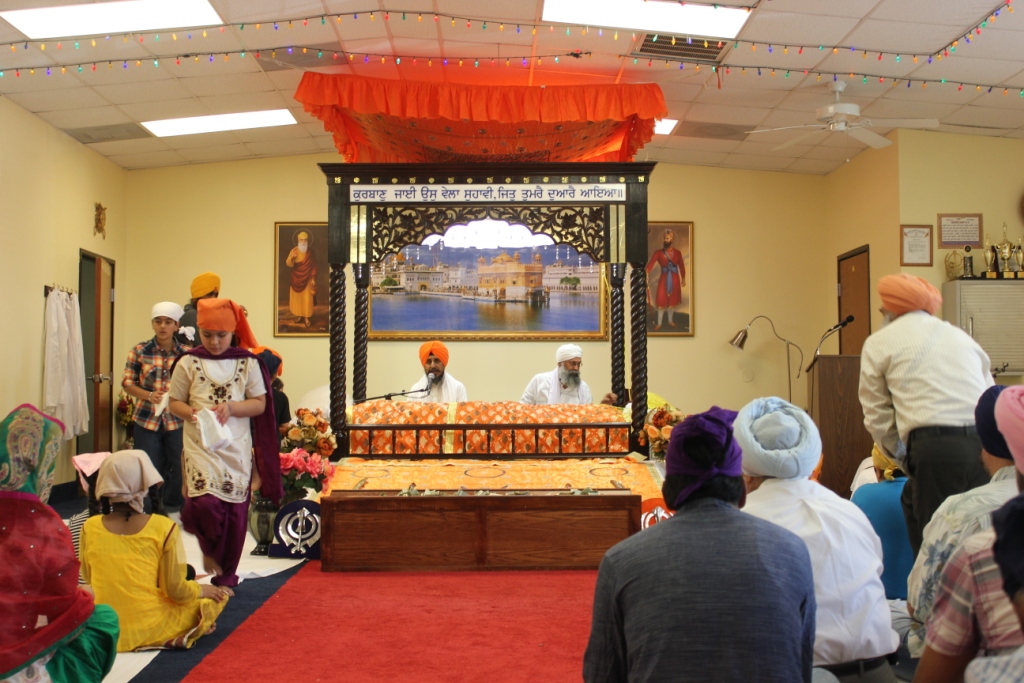
This is why shoes are removed and heads covered in Darbar Sahib, why the Sangat sits on the floor below the Guru, and why Sri Guru Granth Sahib Ji is brought to rest each evening in Sukh Asan.
On Vaisakhi in 1699, at Anandpur Sahib, Guru Gobind Singh Ji called for those willing to give their heads for their faith. Five came forward from different regions and backgrounds, and became the Panj Pyare, the Five Beloved Ones. The Guru initiated them with Amrit, and then asked them to initiate him in turn — Guru and Sikh standing on the same ground.
Those who take Amrit join the Khalsa and keep the five articles of faith, worn at all times as a visible commitment:
Uncut hair, kept covered by a dastaar — accepting the form the Creator gave.
A small wooden comb — cleanliness and discipline in daily life.
A steel bracelet — a reminder on the hand that binds the Sikh to the Guru.
A cotton undergarment — self‑restraint and readiness.
A sword carried in dignity — the duty to defend the weak and stand against injustice.
Everyone is welcome at the Gurdwara whether or not they have taken Amrit. These are commitments taken freely, when a person is ready.
Five seats of Sikh authority, each tied to a moment in the Guru Sahibs’ lives.
Amritsar, Punjab — established by Guru Hargobind Ji in 1606 as the seat of temporal authority, facing Sri Harmandir Sahib.
Anandpur Sahib, Punjab — where the Khalsa was founded on Vaisakhi 1699.
Talwandi Sabo, Punjab — where Guru Gobind Singh Ji prepared the final recension of Sri Guru Granth Sahib Ji.
Patna, Bihar — the birthplace of Guru Gobind Singh Ji.
Nanded, Maharashtra — where Guru Gobind Singh Ji conferred Guruship on Sri Guru Granth Sahib Ji in 1708.
A gurpurab marks a Guru Sahib’s parkash (birth) or shaheedi (martyrdom). Dates follow the Nanakshahi calendar, so some move from year to year.
| Occasion | Usually falls | What happens at the Gurdwara |
|---|---|---|
| Parkash Purab of Guru Gobind Singh Ji | December / January | Diwan, kirtan and langar |
| Vaisakhi — birth of the Khalsa | 13 or 14 April | Nagar Kirtan, Nishan Sahib Sewa, Amrit Sanchar and langar |
| Shaheedi Purab of Guru Arjan Dev Ji | May / June | Diwan and chhabeel (sweet drink served to all) |
| Parkash Purab of Sri Guru Granth Sahib Ji | August / September | Akhand Path and diwan |
| Bandi Chhor Divas | October / November | Evening diwan and deepmala (lamps) |
| Parkash Purab of Guru Nanak Dev Ji | November | Akhand Path, diwan, kirtan and langar |
| Shaheedi Purab of Guru Tegh Bahadur Ji | November / December | Diwan and katha |
| Shaheedi of the Sahibzade | December | Diwan and remembrance programs |
Swipe the table sideways to read more.
The Sikh Rehat Maryada is the agreed Sikh code of conduct and conventions — covering personal practice, the running of a Gurdwara, kirtan, Ardas, and the ceremonies of Amrit Sanchar, Anand Karaj and Antam Sanskar. It was settled after many years of consultation and is published by the Shiromani Gurdwara Parbandhak Committee (SGPC), Sri Amritsar, under the directives of Sri Akal Takht Sahib.
This page is only a short introduction. For authoritative guidance, please read the Rehat Maryada itself or speak to the Granthi Sahib at the Gurdwara.

You do not need to be Sikh, or to know anything at all, to visit. Read our short first‑visit guide and join us for a diwan and langar.